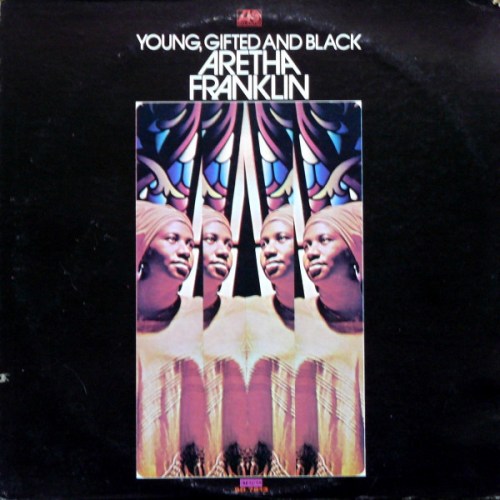
Aretha Franklin, the Queen of Soul and one of the world’s best selling artists of all time has this extraordinary way of making a song her own. Take for instance, ‘Respect‘, one of her best loved and well known hits, as a child when I first heard it, I didn’t realise the song was written and first recorded by Otis Redding.
Aretha’s version was the first version I heard, so I assumed was her song, and at the time her name was synonymous with the song because she totally owned it. She took a song that seemingly reinforced traditional gender roles and turned it into a feminist and civil rights anthem with it’s demand for dignity (“give me my propers”). She even took the time to spell out the song title, for those who didn’t hear at the back, with the added instruction to “find out what it means”.
The song is the ultimate clapback, to men in particular, who were doing the most to keep women “in their place”. And from a civil rights point of view, the establishment which was trying to keep Black “in their place” by denying them basic rights. Otis Redding would comment admiringly about Aretha’s cover of his song: “That little girl done took my song away from me.”
Take me to church
Another way in which Aretha makes a song her own is infusing it with her gospel music background by “taking it to church” as they say. ‘Bridge Over Troubled Water‘ is just one of several examples. I remember singing the song in school and at home we had the original Simon & Garfunkel version on the album of the same title. But it’s Aretha Franklin’s cover which is embedded in my spirit.
I was listening to it again while writing this post and that gentle admonishment to not “trouble the water” and to “leave it alone” at the begining of the song is like the wise words of a church mother, auntie or grandmother to a child.
And with the ever familiar gospel organ and piano riffs, I am damn near sure that Christ himself is singing this song through Aretha into my heart, telling me that he is my comfort, my peace and is 100% here for me through all of life’s troubled times. By the time we get to the last verse, I’ve reached heaven’s gates! Such is the transcendent power of Aretha Franklin’s vocals.
To be young, gifted and Black
So coming to ‘Young, Gifted and Black’, a 1969 song originally by Nina Simone (as ‘To Be Young Gifted, and Black’), once again Aretha Franklin takes us to church reminding us of a God in heaven watching over us.
An anthem of the Civil Rights movement, the song title ‘To Be Young, Gifted and Black’ comes from Lorraine Hansberry’s autobiographical play of the same name, which highlighted her years from her early childhood in a Chicago ghetto to her later life, including her creation and inspiration for A Raisin in the Sun.
By the late 60s, pride in being Black and beautiful was both a political and cultural statement, expressed by raised fists, natural Afro hair and fashion that heralded a love and appreciation for African heritage and ancestry.
After Hansberry’s death, Nina Simone wanted to capture the joy and beauty of Black identity as well as pay tribute to the memory of her good friend. Together with her bandleader Weldon Irvine who wrote the lyrics she composed this song to “make Black children all over the world feel good about themselves, forever.”
“You are young, gifted and Black”
We must begin to tell our young
There’s a world waiting for you
Yours is the quest that’s just begunWhen you’re feelin’ really low
Yeah, there’s a great truth that you should know
When you’re young, gifted and Black
Your soul’s intact
There are several cover versions of ‘Young, Gifted and Black’ including those by Bob and Marcia, and Donny Hathway. There’s also a very ill-advised cover by Elton John and the less said about that the better – I’m protecting my (and your) peace!
But as ever, it’s Aretha’s version that stands out to me, which ironically Donny Hathaway played the keyboard on. It’s a beautiful rendition, sung in reverence, thanks and joyful praise of Blackness, to a people gifted with such a blessing amid their many trials, tribulations and woes.
As mentioned in previous posts the 1970s were a time turmoil, anger, frustration and much cynicism. What Aretha Franklin does, as Nina Simone did before her, was to bring hope as well as pride in oneself. Aretha’s use of a gospel rendition, brought the song back to the early days of the Civil Rights movement, when it was the Black church that led the struggle under the leadership of the likes of Martin Luther King Jr. Which is kind of ironic seeing as Nina Simone was not about the non-violent protest life.
But no matter what, the power and strength of this song will never end. It reminds us as Black people of who we are and what we have endured and are still enduring. And importantly it gives us a reason to fight on, so that future generations of Black children can sing that they too are young, gifted and Black. The legacy that Nina Simone wanted and one that Aretha in her own unique and indomitable way continued.
Listen to Young, Gifted and Black here:
Sources
To Be Young, Gifted and Black – Wikipedia
Nina Simone’s ‘Lovely Precious Dream’ for Black Children by Noel King and Walter Ray Watson
Aretha Franklin – Wikipedia
“Young Gifted and Black”: nothing could stop Aretha by Jacques Denis
 Just Read It