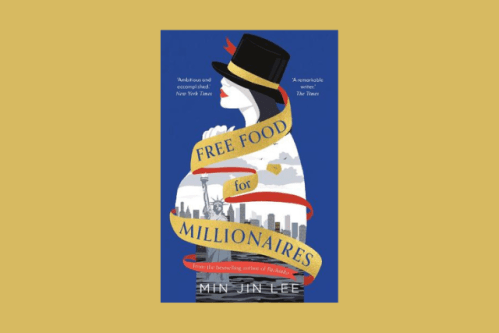
Casey Han is a strong-willed, artistic and intelligent daughter of Korean immigrants who manage a local neighbourhood laundromat. A Queens-bred, Princeton graduate, she is also addicted to a glamorous Manhattan lifestyle she really cannot afford. Having failed to get an internshp position and no other options in the pipeline, other than the Saturday position at a family friend’s department store in the millinery department which barely allows her to makes ends meet, Casey is stuck, directionless and spiralling fast into debt. How will she create the life she dreamed for herself when she seems to always get in her own way?
Min Jin Lee explores the intergenerational strife and struggle of a community clinging to the old ways while trying to survive in a city of haves and have-nots. Casey Han is an accurate portrayal of most people raised by immigrant parents in their chosen country, be it the US or Europe. She desperately wants her life to be different to that of her parents and with her elite education and supposed career prospects, it appears, at least on paper, that everything is hers for the taking. But she doesn’t count on the unspoken expectation that she should not feel entitled to have everything, especially as a Korean-American, and especially as a woman. That luxury is mainly reserved for white men.
Her college boyfriend, Jay somewhat exemplifies this notion. Like Casey he also is from humble beginnings, raised by a single mother after his father leaves the household. But as a white man, his entry and rise throught the cut-throat, fast-paced world of investment banking is much smoother than Casey’s and it appears that never once does he question or does anyone else question his place there despite his background. Similarly, Ted, also Korean-American and the fiance and later husband of Ella, Casey’s friend maintains hs position and sense of belonging by adopting the Masters of Universe persona that all his white peers use, where he takes what he believes is his by right, to detriment of his personal relationships.
At the heart of Casey’s journey through the novel is not her relationship with money but also her desire to be her own person on her own terms. Her father wants her to go to law school but Casey is not keen on the idea, leading to a devastating argument, that severerly fractures familial relations. Her boss Sabine graciously offers to pay for Casey to attend business school with the idea that she will one day run the store that she currently owns. The offer as kind as it is doesn’t sit well with Casey as she rightly sees all the caveats that come with such an offer, so she elects to pay her own way at the business school of her choice – to the frustration of Sabine who sees the decision as a snub.
In fact, everyone from her family to her co-workers have their idea and expectation of what Casey should do and who she should be, which whether knowingly or unknowingly she bucks at every turn, choosing to do things that at times seem ridiculous and perhaps frivolous, given her financial situation, for example, her decision to take a hat making course when she can barely afford to pay rent. But Casey’s decisions, questionable though some might be, are not without with value or merit because they contribute to the person she is and becomes by the end of the novel. They make up part and parcel of her life’s journey and in some respects this is somewhat a coming-of-age story or rather an “updated Victorian novel of progress”, as one critic put it, where Casey finally realises and accepts who she is and stops being ashamed of what it is that she actually wants.
One of my favourite characters was Ella, the rich girl who has everything but believes she is nothing. Her kindness and sweetness to everyone around her, even when they act pretty unforgivably towards her, is almost saintly but not in an unsincere way. She’s able to meet people where they are at and accept them for who they are and the person they potentially could be. This is demonstrated is in how she takes a homeless Casey into her home before they become fast friends and also towards the end of the novel when she takes in her debt-ridden gambling addicted cousin Unu.
Ella’s selfless acts of grace could be quite jarring in other othe book but because of the various situations some of the characters find themselves in, it’s a much needed light in some dark times when people literally need saving from themselves. Religion and faith is a theme that runs quite strongly throughout the entire novel: where some use faith as a means to hide who they truly are, for example the enigmatic choir director at Casey’s parent’s church, some use faith as a guide to how one should live, as does Casey’s mother and some for comfort and habit as Casey does.
Free Food for Millionaires is a big community novel with a wide range of characters. I loved the way that no matter how minor a character, Min Jin Lee, takes the time to describe them and give them a place in the story even if it’s fleeting. Everyone and everything is significant, and not a single word is wasted. I’m pretty sure that if I read this book again I would find things that I hadn’t seen before and certain scenes would most probably hit differently.
It’s an ambitious and rich novel, reminding me a little bit of A Suitable Boy by Vikram Seth, in terms of the suite of characters, of which I’ve only touched on a few. If you read and enjoyed Patchinko, Min Jin Lee’s other critically acclaimed novel, then I am certain that you will enjoy this.
 Just Read It