Recently a friend was asked “what kind of Black are you?” during an interview in a podcast. I thought was a really good question as it lends itself to the premise that Black people are not a monolith – and never have been despite many representations that have been singularly defined as ‘black’.
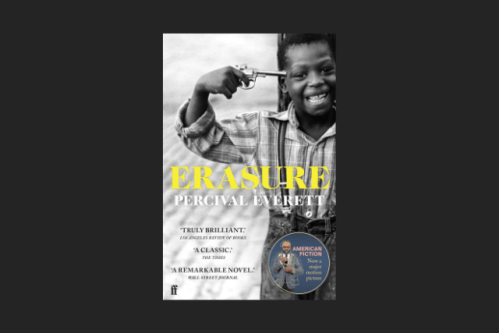
The question around what being Black is – or isn’t – is the central theme in Erasure by Percival Everett. Recently adapted into an excellent film, American Fiction, the novel revolves around Thelonious “Monk” Ellison, a writer and professor of English Literature.
Frustrated with how the publishing industry pigeon-holes African American authors – his work is frequently critised as “not being black enough” – Monk’s ire with the industry pushed to the proverbial edge by the critical and commercial success of a so-called “ghetto novel” We’s Lives In Da Ghetto, by first-time writer Juanita Mae Jenkins.
Overwhelmed by the financial burden of his mother’s healthcare needs and his declining career prospects, Monk sets about writing a satirical, if not spiteful response, to Jenkins’ novel under the pseudonym Stagg R. Leigh.
Titled My Pafology, later renamed Fuck to antagonise his publishers, the book is directly influenced by Native Son by Richard Wright and Push by Sapphire and is outrageous in its portrayal of a poor, ill-educated, young Black man, named Van Go Jenkins (that he uses the surname of his nemesis sent me!), who’s criminal activities catch up with him in the most inevitable and brutal fashion.
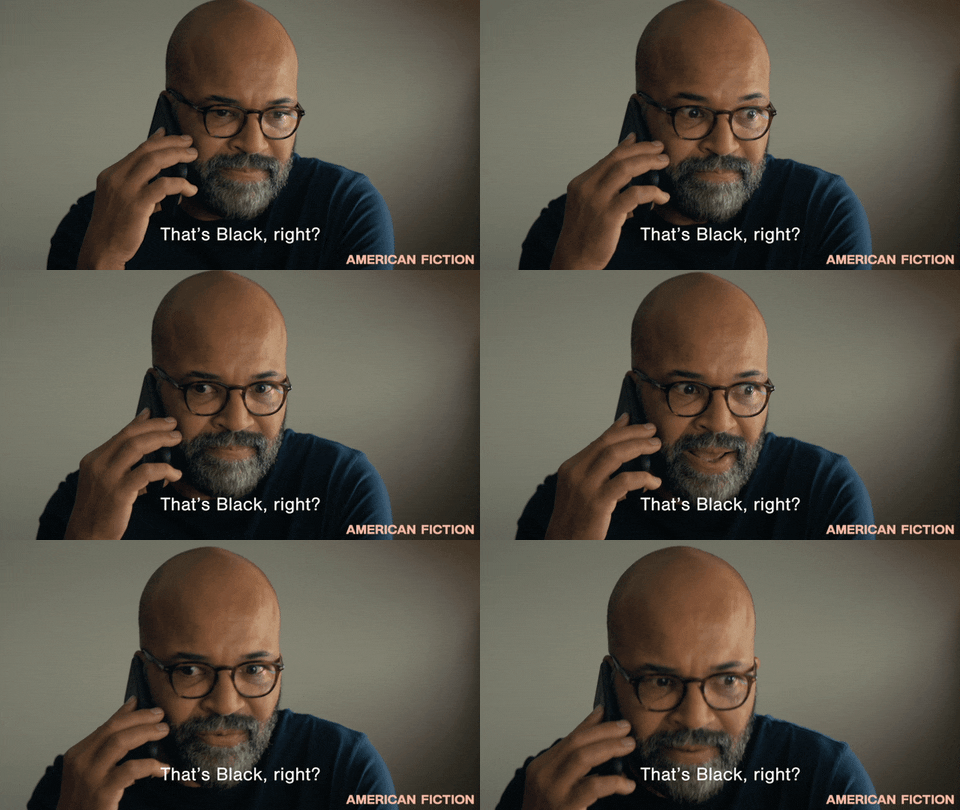
To Monk’s horror the book is a runaway success with a film adaptation in the works as well as a nomination for one of the highest literature honors. And like a literal Dr Frankenstein, Monk now has to contend with the reality of the monster he has created.
Monk’s disgust at finally obtaining commercial success for a work that he despises is as comical as it understandable. Monk is such a literary snob – he even sabotages a burgeoning relationship with a woman because she had read and enjoyed We’s Lives In Da Ghetto – that he considers that no intelligent, literary person would ever consider Fuck to be ‘good writing’ or even readable. But Fuck is a compelling read and despite myself I found myself sorta, kinda, guiltily enjoying it – much like watching a Tyler Perry movie.

Written in ten chapters as a novel within a novel, Monk employs every single lazy racial sterotype and cliche he can think of from aggressive Black male sexuality to violent criminal excess. However it gets to the point where it actually feels more like exploitation than parody or satire, especially given that Monk isn’t writing from a place of experience.
The way the book is received by Monk’s peers exposes their ignorant perceptions of Black people in general. I winced everytime Fuck and by extension We’s Lives In Da Ghetto was referred to as being representative of the entire African American experience, because of course they are not, and Monk as a middle-class African-American English professor is proof. But his peers conveniently and consistently ignore this and the slow erasure of Monk’ identity becomes more apparent as the charade continues.

In addition to Monk’s descent into a professional abyss and his ensuing identity crisis is the side plot involving his family. As a prickly, elitist snob, Monk is not necessarily the most sympathetic of characters but his interactions with his family and especially his coming to terms with his mother’s Alzheimers – another erasure which he has to deal with – allow the reader to see another facet of his personality and empathise accordingly.
I can’t help but see the moments when Monk’s mother fails to recognise him juxtaposed against the times when Monk ‘cos-plays’ as Stagg R Leigh and see how disorientating Monk’s life had become even though he was the author of his situation. By the novel end, and also with the film version, I found myself questioning what was real and what was the fiction. Is Erasure a novel within a novel within a novel?
Although there were some elements that I didn’t care for such as Monk’s paper on semiotics, I really enjoyed Erasure. I liked the novel within a novel structure, and how the novel as a whole included different elements such as Monk’s notes for future novels, seemingly random memories from his childhood, and his imagined conversations between various literary figures. It’s a book full of experimentation and challenging ideas laced with a bitter humour and irony, which I highly recommend.
 Just Read It