
What if an app or service matched people with the perfect wife or husband for a fixed period? Like Tinder but for serial monogamists – who also don’t like long-term commitment.
Would a service like that make relationships easier or complicate things further? What would society begin to look like, what would change, and what would stay the same?
I found myself asking these questions as I read The Trunk by Kim Ryeo-ryeong, which is also the inspiration behind the TV series of the same name, currently streaming on Netflix.
Noh Inji is a professional wife employed by NM (New Marriage), a mysterious and secretive company that rents out ‘field spouses’ to its elite clientele.
Everything is tailored to the client’s desires, except there are no legal battles, fights, or emotional baggage. Most importantly, it’s only temporary, which suits Inji perfectly.
But when Om Tae-seong, a man she briefly dated in between spouses, starts harassing and stalking her, Inji begins to question the life she has chosen as the darker side of NM is exposed.
The Trunk is a curious blend of romance and suspense with a generous helping of social commentary. The story moves along quite slowly; aside from the stalker plot, nothing much happens. Inji dutifully performs her role as a field wife – some housework, some sex, some conversation and the odd weekend trip away – as she muses about love, relationships, and the societal expectations that govern them.
She acts as though she is outrightly opposed to serious relationships – at least in the conventional sense – and as the novel progresses, it becomes clear that she feels more constrained by the expectations placed on her in a conservative country and culture.
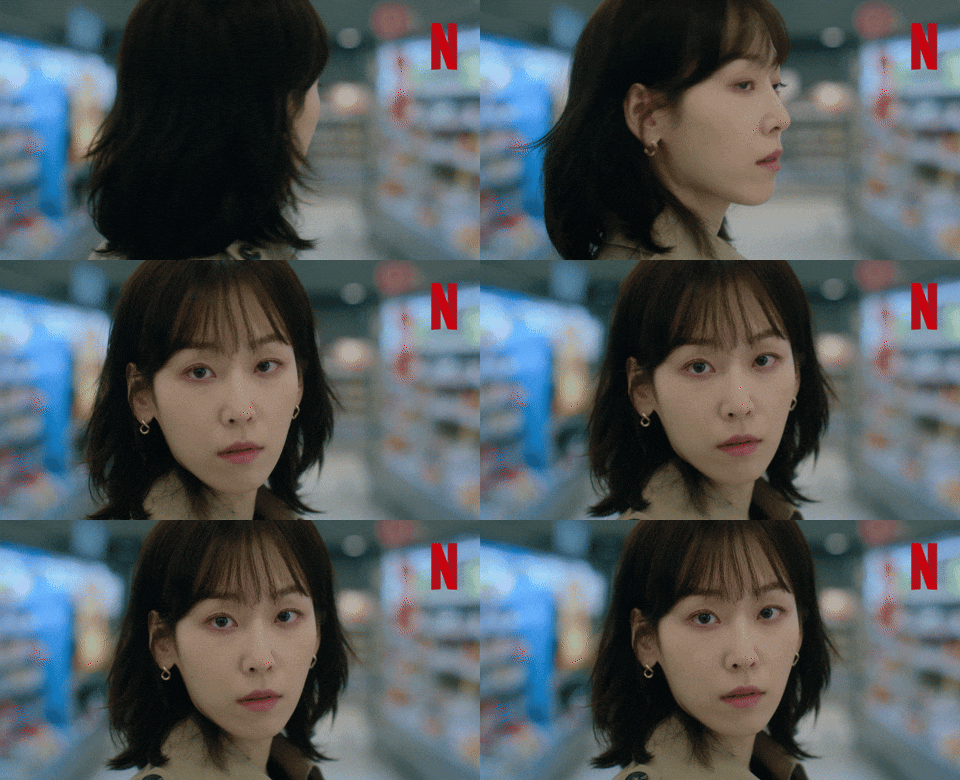
Kim Ryeo-ryeong’s commentary on the high value placed on marriage in Korean culture is one of the novel’s strengths, especially how it plays out against women’s favour. Inji’s antagonistic relationship with Om Tae-seong is a good example, as he sees her as a single woman in her thirties who has no right to be choosy about who she dates or even marries. She should be happy that someone, i.e. someone like him, is even paying her attention.
As readers, we know that Inji does have marriage choices through NM. Even so, she has minimal freedom to reject potential spouses. So even in this seemingly liberal context, she’s constrained by rules not of her making.
Furthermore, although being an NM field wife can be regarded as a rebellion against the traditional institution of marriage in terms of its serial and contractual nature, Inji’s ‘marriages’ are conventional in substance.
Besides the freedom to walk away once the contract ends with no fuss, it’s hard to see what she gains. NM is not the answer to resisting the traditional conventions of marriage; as Inji realises, it’s another institution, a capitalist corporation, where money determines what you get in a relationship.
I enjoyed reading The Trunk despite its slowness, although, to be fair, the Netflix version is also slow. Inji’s inner monologue, which often contrasted with her detached demeanour, provided much of the story’s humour, particularly her observations of the people around her.
I liked the husband’s portrayal in the novel. Nothing seemed to phase him as he had this mysterious and enigmatic air. And I enjoyed the hint of ‘will they, won’t they’ between him and Inji as they grew more affectionate, blurring the lines of their transactional relationship. Those who’ve watched the TV show will know that it explores their relationship dynamic in much greater detail than in the book.
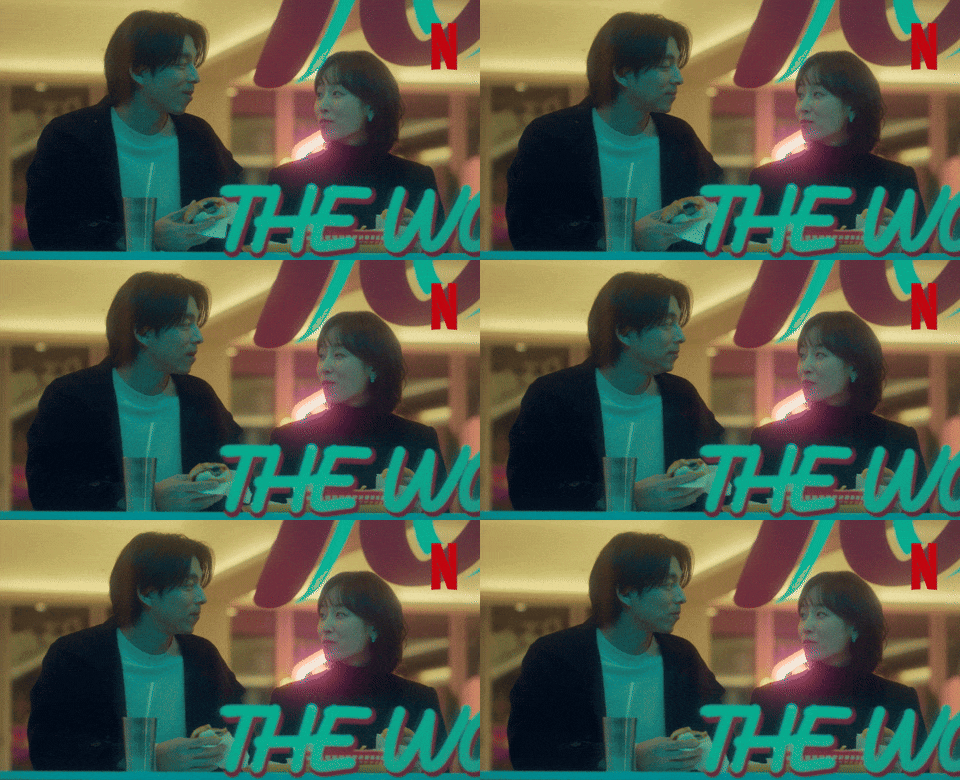
What I liked most is that the stalker plot made more sense to me in the novel and was the main reason I finished reading it. The portrayal of Om Tae-seong’s harmless, nice-guy persona was very unsettling, as his behaviour escalated to a dangerous sense of entitlement.
This plotline worked so well because it was on familiar territory. Unfortunately, many women can relate to being pestered by a guy who doesn’t seem to understand “no thanks” or “go away”. Plus, his seemingly innocent hobby of making rice cakes creeped me out!
Overall, The Trunk is a good novel, especially if you enjoy Korean literature, though it felt like reading a short story. When I finished reading, I had so many questions that I knew I would have to reread it at some point to see if I missed something the first time. That’s not necessarily bad, but it makes me wonder if some nuances were lost in translation or if the novel needed more development of the characters and the story.
Have you read The Trunk and/or watched the Netflix show? What did you think? Feel free to share your comments below.
 Just Read It