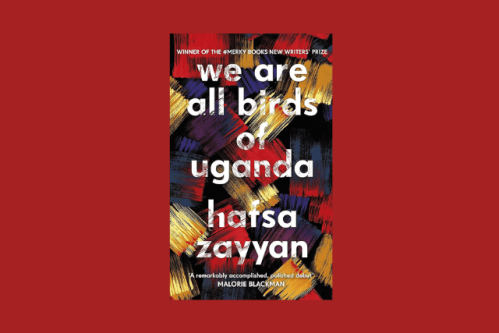
We Are All Birds of Uganda explores identity and belonging through two interconnected stories switching between different timeframes.
In Uganda, Hasan struggles with the societal upheaval and trauma caused by Idi Amin’s coup. In a series of letters written to his dead first wife, he details the events leading up to the expulsion of the Asian community from Uganda in 1972 and his bitter experience of life in Britain, where, once again, he is an unwelcome visitor.
Bewildered and bitterly ashamed, Hasan tries to reconcile his past mistakes, losses, and injustices until his return to Uganda in the mid-late 1980s.
In the present day, Sameer, Hasan’s grandson, a corporate lawyer living in London, prepares for a career move to Singapore against the wishes of his family, who want him to move back home to Leicester and join the family business.
However, a near-fatal, racially motivated attack on one of his best friends leads Sameer instead to go in search of his roots in Uganda. There, he finds love and discovers the beauty of a country where the painful legacy of colonialism and the divide between Africans and Asians remains.
I enjoyed reading the historical and social context of the story as detailed through Hasan’s letters, which, for me, is the novel’s main strength.
The expulsion of the Asian community from Uganda and its impact on later generations, particularly in terms of community relations between Asians and people of African descent, is not something that has been readily discussed. So, I welcomed Zayyan’s attempts to address the issue in this story.
Throughout his letters, Hasan expresses anti-black prejudice, which was uncomfortable to read. However, his sentiment was important in contextualising the decades of resentment built between the African and Asian communities.
The viewpoints from both communities are balanced fairly well, though you only get the African point of view in the latter part of the book, as explained by Maryam, a Ugandan woman and Sameer’s love interest.
Still, it is clear how events happened the way they did, and Zayyan is careful not to weigh favour towards one community over another. Furthermore, Maryam explicitly points out the role the British played in setting Africans and Asians against each other, showing the far-reaching effects of colonial rule in Uganda and other East African nations.
The latter parts of the novel felt like reading a tourist guidebook as Sameer travels around Uganda, taking in the main attractions and getting a taste of the local cuisines. It’s during his visit that he becomes painfully aware of the vast inequalities that exist in Uganda as well as within his own family, which he has clearly benefitted from.
Despite his growing self awareness, Sameer was also a somewhat frustrating character because he could be very indecisive and only seemed to make decisions when circumstances forced his hand. The only time you see him being firm in his conviction was in his desire to marry Maryam, despite the backlash from his family.
I enjoyed the love story between Sameer and Maryam, especially with the portrayal of Muslim courtship and the different wedding traditions of their respective families. However, it would have been good to explore how they would have navigated their relationship in Uganda after marriage in more detail as interracial couples are uncommon
Also it did feel, contrived as it may be, that Zayyan was perhaps attempting to heal the wounds of Sameer’s and Maryam’s already intertwined pasts by bringing them together in this way, but I’m not mad at that.
However, when Sameer’s successful business startup unwittingly threatens local Ugandan competitors, it highlights a critical issue of the frustration and disenfranchisement Ugandans experience.
As Sameer wrestles with how best to handle the situation, its stunningly clear that the legacy of the past is not easily healed, and there is still some way to go before social and economic inequality in Uganda is fully redressed.
 Just Read It